.jpg)
.jpg)


Thursday, January 6, 2011
EDWARD CHARLES WRIGLEY
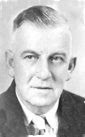
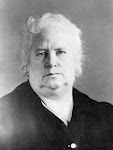
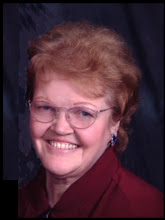
Kathy Kirkham Reed has provided access to two new pictures of Edward Charles Wrigley. I have posted them with the picture I posted previously.

Wednesday, January 5, 2011
SPICED BACON !??! FOR CHRISTMAS
Posted by Carolyn J. Christensen
IF ANY OF YOU HAVE THIS TRADITION OR MAKE SPICED BACON - PLEASE COMMENT.
IF ANY OF YOU HAVE THIS TRADITION OR MAKE SPICED BACON - PLEASE COMMENT.
After talking to some of my relatives, I found out that there are those who actually do not know what Spiced Bacon is, and who have not eaten it on Christmas Morning. What a surprise to me. I don’t remember a Christmas without spiced bacon. I will set forth my memories of this delectable meat as well as a recipe for any who would like to try it. I consider this an English Christmas Tradition passed to me though a long lines of ancestors, and therefore think of the recipe as an heirloom, and preparing the dish as a reminder of my heritage.
I remember Grandma Sarah Wrigley Kirkham and later my mother serving spiced bacon at Christmas. From conversations about this food, I think it came from a recipe passed down in our family from England. Since, in early days, people made (or spiced) their own bacon or fresh side pork, this is probably one of many recipes to do so.
By the time I came on the scene, this meat was served only at Christmastime. That could have been true of spiced bacon in England, seeing that two spices included in it were probably expensive at that time, so it was served as a Christmas treat.
When I was young, a slab of fresh side pork was purchased, sprinkled with the spices, rolled into a roll and tied with a string at least two weeks before serving (so the spices would have time to permeate the meat), then was sliced into bacon strips on Christmas morning, cooked and served.
I have seen the method evolve and today, a few days before Christmas, I purchase several pounds of sliced fresh side pork at the local store. If there is a choice, I always have it sliced thick (as opposed to thin – learned from sad experience). It comes looking like a package of bacon. Usually I call ahead to make sure the store I am going to has fresh side pork. Not all stores carry it. At home I open the packages, and spread the bacon in a 9 x 12 pan, one layer at a time, sprinkling the spices on the meat with a salt shaker. If the meat was bought several days before Christmas, it can be covered and stored in the freezer. If prepared one or two days before Christmas, cover and store in refrigerator.
Our Christmas Breakfast consists usually of juice, pancakes, eggs, and spiced bacon. We know that Christmas is really here when the aroma of spiced bacon permeates the house and makes our mouths water and our minds turn to our wonderful heritage.
RECIPIE
1 lb fresh side pork
1 tsp sugar, salt, cloves, cinnamon mixed together in a shaker
CHANGES AND CORRECTIONS: EDWARD CHARLES WRIGLEY
Kathy Reed brought to my attention some changes that needed to be made in Edward Wrigley's life history. I appreciate her doing that and hope anyone will feel free to suggest changes, and especially add information to this Blog. To do so, you can call me, e-mail me, or comment on the site. You will recognize the changes as I will put an asterisk where the change was made, and put the old, incorrect information at the bottom of the article. Thanks again to Kathy Reed.
Saturday, January 1, 2011
HAPPY NEW YEAR - RESOLUTION?
Submitted by Carolyn J. Christensen.
For years, my big Christmas Project was to obtain new Family History materials for our family, then distribute it to my parents, siblings, and nieces and nephews. This project involved reams of paper and many, many notebooks. It also involved trying to formulate a way to keep the material organized - which as many of you know, was nearly impossible.
This Christmas, I sent the following message to those who have always received information from me.
“Merry Christmas:
· The Bad News is that if you don’t use a computer, the following is of little use to you.
· The Good News is that you aren’t getting a bunch of papers from me for Christmas.
· The Better News is that there is an attachment that you can print if you want – or not. It is also below on this email.
· The Best News is that throughout the next year, all the family history I have ever given you in the yearly notebook installments will eventually show up on the Blog Spots. No longer will you have to feel guilty about not being able to get all those papers organized that I have sent you. And – on the Blog Spot, it will all be indexed in the left hand column, and available to anyone who wants to see it with a simple click of the finger.
Sooooo- my Christmas Gift to my Family is :
http://carloscarjohnson.blogspot.com/
http://lottsarahwrigleykirkham.blogspot.com/
A study of family history tells you who you are. What better gift can I give you for Christmas and on a continuous basis than self-awareness – which I will do on these blogs”
For years, my big Christmas Project was to obtain new Family History materials for our family, then distribute it to my parents, siblings, and nieces and nephews. This project involved reams of paper and many, many notebooks. It also involved trying to formulate a way to keep the material organized - which as many of you know, was nearly impossible.
This Christmas, I sent the following message to those who have always received information from me.
“Merry Christmas:
· The Bad News is that if you don’t use a computer, the following is of little use to you.
· The Good News is that you aren’t getting a bunch of papers from me for Christmas.
· The Better News is that there is an attachment that you can print if you want – or not. It is also below on this email.
· The Best News is that throughout the next year, all the family history I have ever given you in the yearly notebook installments will eventually show up on the Blog Spots. No longer will you have to feel guilty about not being able to get all those papers organized that I have sent you. And – on the Blog Spot, it will all be indexed in the left hand column, and available to anyone who wants to see it with a simple click of the finger.
Sooooo- my Christmas Gift to my Family is :
http://carloscarjohnson.blogspot.com/
http://lottsarahwrigleykirkham.blogspot.com/
A study of family history tells you who you are. What better gift can I give you for Christmas and on a continuous basis than self-awareness – which I will do on these blogs”
This message encompasses my plans and desires for the blog for the coming year. Eventually, I hope it can be said that any information I have about this family is on this Blog. Carolyn
REMEMBERING GRANDMA SARAH AND HER WRIGLEY RESEARCH
REMEMBERING GRANDMA SARAH AND HER WRIGLEY RESEARCH or
HOW ARE WE RELATED TO WRIGLEY GUM?
Of course, one of the pieces of “Wrigley” information I received from Grandma Sarah that stood out in my mind is that we were in some way related to the “Gum” Wrigleys. (See last paragraph). Loving to chew gum, and being young, I was very impressed that we were part of that Wrigley Line. However, I was never interested enough to find out just how we were “cousins” to the Wrigley Gum people.
The other part of my “Wrigley” upbringing, was that Grandma Kirkham had traced the Wrigley’s to Barnby Don in Yorkshire, England. After extending the pedigree as far as she could, she applied to the Genealogical Society to do temple work for all the Wrigley in Barnby Don and surrounding villages and towns on the assumption that we were probably related to most of the Wrigleys. This permission was granted, and she spent hours copying Wrigley names from books in local Genealogical Libraries.
At one time in England, it became popular to copy lists of births, marriages, and deaths names from local cemeteries and church records and publish them in newspapers. They were then compiled into books, published, and found their way to the Genealogical Society and it’s offshoots, of which there were two in Shelley, and Idaho Falls.
Grandma would take me to help her copy these names onto group sheets. I soon learned, at a very early age, how to sort these names into families and group them on Family Group Sheets. These sheets would then be sent to the Genealogical Society, cleared for temple work, and sent to the temple. Eventually they would be returned to Grandma Sarah, with an extension glue to the right side indicated the date of the temple work, and who completed it. I inherited a large cardboard box packed tight with Wrigley Group Sheets; the temple work having been done for the names on those sheets. I eventually spent hours organizing them, and trying to form pedigree charts. I soon realized that proving relationship to all these names would be quite difficult, but many were related to our pedigree charts as collateral ancestors.
This experience left me with the impression that although Edward Wrigley had little to do with his “Wrigley” relatives and blood line, it was important to the family, at least to Grandma, to complete the research for the Wrigley line.
Note: In another article on this Blog, I described my experience of traveling to Barnby Don, and impression it left with me. See Parish Chest.
Wrigley Gum Information.
(I don’t even remember where I obtained this little bit of information)
William Wrigley, Jr. was born in 1861. He went into business with his father in 1882 and moved to Chicago. In 1891 William Jr., entered business for himself under the name of William Wrigley Jr. and Co., Manufactures of Chewing Gum. On January 1, 1911 the plant of the Zero Manufacturing Co was absorbed and the name of the corporation was changed to the William Wrigley Jr. of which he was president. William Jr. was president of the First National Bank of Chicago, First trust and Savings Bank, Boulevard Bridges Bank, and Consumers Company of Chicago. William Jr. married Adam L. Foote and to this union was born three children named:
Philip K. Dorothy W. Mrs. James R. Oldfield
William Wrigley Jr. died in 1932 leaving his son Philip K. head of many enterprises.
On Family Search, William is on a pedigree that includes his son Philip and his father and mother. They have not been tied into any other pedigree. There lies a challenge.
HOW ARE WE RELATED TO WRIGLEY GUM?
Of course, one of the pieces of “Wrigley” information I received from Grandma Sarah that stood out in my mind is that we were in some way related to the “Gum” Wrigleys. (See last paragraph). Loving to chew gum, and being young, I was very impressed that we were part of that Wrigley Line. However, I was never interested enough to find out just how we were “cousins” to the Wrigley Gum people.
The other part of my “Wrigley” upbringing, was that Grandma Kirkham had traced the Wrigley’s to Barnby Don in Yorkshire, England. After extending the pedigree as far as she could, she applied to the Genealogical Society to do temple work for all the Wrigley in Barnby Don and surrounding villages and towns on the assumption that we were probably related to most of the Wrigleys. This permission was granted, and she spent hours copying Wrigley names from books in local Genealogical Libraries.
At one time in England, it became popular to copy lists of births, marriages, and deaths names from local cemeteries and church records and publish them in newspapers. They were then compiled into books, published, and found their way to the Genealogical Society and it’s offshoots, of which there were two in Shelley, and Idaho Falls.
Grandma would take me to help her copy these names onto group sheets. I soon learned, at a very early age, how to sort these names into families and group them on Family Group Sheets. These sheets would then be sent to the Genealogical Society, cleared for temple work, and sent to the temple. Eventually they would be returned to Grandma Sarah, with an extension glue to the right side indicated the date of the temple work, and who completed it. I inherited a large cardboard box packed tight with Wrigley Group Sheets; the temple work having been done for the names on those sheets. I eventually spent hours organizing them, and trying to form pedigree charts. I soon realized that proving relationship to all these names would be quite difficult, but many were related to our pedigree charts as collateral ancestors.
This experience left me with the impression that although Edward Wrigley had little to do with his “Wrigley” relatives and blood line, it was important to the family, at least to Grandma, to complete the research for the Wrigley line.
Note: In another article on this Blog, I described my experience of traveling to Barnby Don, and impression it left with me. See Parish Chest.
Wrigley Gum Information.
(I don’t even remember where I obtained this little bit of information)
William Wrigley, Jr. was born in 1861. He went into business with his father in 1882 and moved to Chicago. In 1891 William Jr., entered business for himself under the name of William Wrigley Jr. and Co., Manufactures of Chewing Gum. On January 1, 1911 the plant of the Zero Manufacturing Co was absorbed and the name of the corporation was changed to the William Wrigley Jr. of which he was president. William Jr. was president of the First National Bank of Chicago, First trust and Savings Bank, Boulevard Bridges Bank, and Consumers Company of Chicago. William Jr. married Adam L. Foote and to this union was born three children named:
Philip K. Dorothy W. Mrs. James R. Oldfield
William Wrigley Jr. died in 1932 leaving his son Philip K. head of many enterprises.
On Family Search, William is on a pedigree that includes his son Philip and his father and mother. They have not been tied into any other pedigree. There lies a challenge.
EDWARD CHARLES WRIGLEY/STEELE
Submitted by Carolyn J. Christensen, Great granddaughter of Edward Charles Steele/Wrigley
Adah Lucy's parents never had a son so she promised them before father was born that if her baby was a boy, they could have him; so he was given to them even before he was born. His own father never recognized him as a son, and Ed lived with his grandparents and was called Ed Steel.
The first few years of his life, the Steels lived in Salt Lake City. Their home was across the street south from the city and county building. Ed's playmates were *Herbert and George Auerbach, and their sister and William Wallace in Salt Lake. Other boyhood chums were Ned Wild, Ed King, Rona and Esther Paxman, later in American Fork. He told of an old man Maycock who was the street lamplighter. Also, he told of an old Negro woman who lived in the court back of them who said she would be willing to be skinned alive to be able to go to the temple. Sometimes Ed would go swimming in the Mill Stream in City Creek Canyon. Oscar Hunter was Bishop of the Eight Ward then.
Ed's grandfather Steel made the doors and windows for the Salt Lake Tabernacle. His Grandparents later moved to American Fork. He said he would sit on his fathers bench and watch him work and as soon as he could drive a nail, he went with him to help him.
I don't think his childhood days were very happy ones. From my memory of Grandma and Grandpa Steel, they were very eccentric and cranky. I've heard father say the only real father he had was Grandpa Robinson, his father-in-law.
The Steel home in American Fork, as I remember it, was an adobe with a long walk from the gate to the house with an ash tree on each side of the gate. One of the trees had seed pods but the other tree never did have any. There was a herb garden on one side of the path with lavender, heliotrope, verbena, sage, parsley and thyme. Grandma Steel put sprays of lavender and heliotrope in the drawers with her clothes. There was a large tea vine on the back porch, a cellar full of wine and cider and a grape arbor and wine press in back of the cellar.
Edward was never legally adopted, so he took his own name for the ceremony when he was married, but never liked to be called Ed Wrigley. He married Sarah Ann Robinson May 15, 1888 in American Fork, Utah. Her parents had also joined the church in England and came to America for the gospel.
When Ed and Sarah had been married for about six years and had three children, Charley, Adah and I (Sarah), his father (Joseph Wrigley) came to American Fork to see him. Father said his father found Ed was doing pretty good and had a good trade, so he pretended he was sorry for the indifference he had shown and induced him to move to Castle Valley in Emery County, Utah. Here his father had two families having married Ann Singleton who had a large family and Dina Stoddart Crookston who had two children. Father homesteaded a farm between Ferron and Castledale. He had not been down there long before he found out his father's motives were selfish. Joseph knew father was a good carpenter and thought he would work for him for nothing. When Joseph found out father would not be bullied and kicked about like the rest of the family, he wanted nothing to do with his son.
Father learned to love his Aunt Annie (Singleton Wrigley) and her family treated him like a brother, but his dislike for his father grew stronger. He felt sorry for the cruel treatment the other children got from Joseph.
Mother and Dad had a hard time in Castle Valley. Father knew very little about farming. They lived so far from the railroad that local produce was very cheap and food that had to be shipped in was so high it was not within their reach. Mother said she had to trade three dozen eggs for a spool of thread. Sugar was fifty cents a pound, a luxury they could not afford. They used honey for sweetening until mother could hardly stand the smell of it. I was only five years old, but I can remember what a grand occasion it was when we got a box from Grandpa Robinson in American Fork. He would send shoes and pieces of cloth for dresses. In one box he put in a note that said, "If you don't like these things, send them back."
We lived like this for three years. In that time it seems like mother said we made five trips to American Fork. Each trip was made over a different route, and during all seasons of the year. I remember my parents made a fire to melt the snow so they could make their bed by the fire. Then they made a bed in the corner of the wagon for us kids. The horses would be tied to the wagon and we could hear them eating all night. It took from five to eleven days to make the trip.
One time we were caught in a sand storm. Father had to get out and dig the sand away from the wheels so the horses could move the wagon. It seems like that was near Orangeville.
When I was eight years old, we moved to Lehi in the cottage back of the Union Hotel, which Grandma Stoddart (Edward's birth mother) ran. From here, we moved into a one room house in the Locust Grove. Willie was born in the Locust Grove. Soon after that, father bought a lot and built a house. Then when we moved into the new house, Nona, Menta, and Velma were born.
Willie had died in December, five months after his eight birthday when his mother was six months pregnant with Velma. (That story is told in Sarah's history.) Velma was born three months after Willie's death, but died of scarlet fever when she was four years old. **
When father couldn't get work at home, he would go to Salt Lake City where, with the help of his Uncle Richard Chamberlain, he could always get work. When Velma died, mother was on the verge of a nervous breakdown so we moved to Salt Lake so she would not have to be alone. +Helen was born in Salt Lake City and then Robin (Bob) was born in Salt Lake in 1915. (It is interesting to note that Sarah was 27 years old when her youngest brother was born. Edward would have been 51 years old and his wife, Sarah was 47 at the time of Bob's birth.)
My parents lived in Salt Lake City until their death. Mother died November 13, 1925 at the age of 57, (when Bob was 10 years old), and father died December 5, 1929.
*changed from Overbach. A search by Kathy Reed revealed no records of Overbachs that would justify the name.
** The following was removed, as Helen was born in Salt Lake City after Velma died. "At that time of Velma's death, Helen was very young".
+"Helen was born in Salt Lake City and then" was added to more correctly reflect the sequence of events.
EDWARD CHARLES WRIGLEY


.jpg+(4).bmp)

Edward and Sarah are in the back row on the right.
.jpg+(4).bmp)
(A Sketch written by his daughter, Sarah Adelaide Wrigley Kirkham)
A picture of Edward is elsewhere on this sight. Click on his name in the alphabetized Index in the left hand column.
My father, Edward Charles Wrigley, was born September 21, 1864 at American Fork, Utah. His father was Joseph Wrigley, son of Thomas Wrigley and Grace Mary Wilkinson. His mother was Adah Lucy Steel, daughter of Edward Steel and Lucy Charles who joined the church in England and came to America for the Gospel, bringing with them the two children, Adah Lucy and Sarah.
Edward's father and mother did not live together very long after their marriage on 25 November, 1863, and were later divorced. His mother was only sixteen years old when Edward was born the next September. Edward's mother later married Robert Stoddart on 8 September 1974, from which union came ten children. It seems his father never made a home for his mother but took her to live with his parents in Provo, Utah. I have heard Grandma(Lucy) say that Joseph was very mean to his wife, Adah Lucy, and did everything he could to make her life miserable. For instance, he would ride a horse and dig its sides with spurs and jerk at it until the blood would be streaming from it, then chase her with it. She could not stand such treatment in her condition so she went home to live with her parents.
Adah Lucy's parents never had a son so she promised them before father was born that if her baby was a boy, they could have him; so he was given to them even before he was born. His own father never recognized him as a son, and Ed lived with his grandparents and was called Ed Steel.
The first few years of his life, the Steels lived in Salt Lake City. Their home was across the street south from the city and county building. Ed's playmates were *Herbert and George Auerbach, and their sister and William Wallace in Salt Lake. Other boyhood chums were Ned Wild, Ed King, Rona and Esther Paxman, later in American Fork. He told of an old man Maycock who was the street lamplighter. Also, he told of an old Negro woman who lived in the court back of them who said she would be willing to be skinned alive to be able to go to the temple. Sometimes Ed would go swimming in the Mill Stream in City Creek Canyon. Oscar Hunter was Bishop of the Eight Ward then.
Ed's grandfather Steel made the doors and windows for the Salt Lake Tabernacle. His Grandparents later moved to American Fork. He said he would sit on his fathers bench and watch him work and as soon as he could drive a nail, he went with him to help him.
I don't think his childhood days were very happy ones. From my memory of Grandma and Grandpa Steel, they were very eccentric and cranky. I've heard father say the only real father he had was Grandpa Robinson, his father-in-law.
The Steel home in American Fork, as I remember it, was an adobe with a long walk from the gate to the house with an ash tree on each side of the gate. One of the trees had seed pods but the other tree never did have any. There was a herb garden on one side of the path with lavender, heliotrope, verbena, sage, parsley and thyme. Grandma Steel put sprays of lavender and heliotrope in the drawers with her clothes. There was a large tea vine on the back porch, a cellar full of wine and cider and a grape arbor and wine press in back of the cellar.
Edward was never legally adopted, so he took his own name for the ceremony when he was married, but never liked to be called Ed Wrigley. He married Sarah Ann Robinson May 15, 1888 in American Fork, Utah. Her parents had also joined the church in England and came to America for the gospel.
When Ed and Sarah had been married for about six years and had three children, Charley, Adah and I (Sarah), his father (Joseph Wrigley) came to American Fork to see him. Father said his father found Ed was doing pretty good and had a good trade, so he pretended he was sorry for the indifference he had shown and induced him to move to Castle Valley in Emery County, Utah. Here his father had two families having married Ann Singleton who had a large family and Dina Stoddart Crookston who had two children. Father homesteaded a farm between Ferron and Castledale. He had not been down there long before he found out his father's motives were selfish. Joseph knew father was a good carpenter and thought he would work for him for nothing. When Joseph found out father would not be bullied and kicked about like the rest of the family, he wanted nothing to do with his son.
Father learned to love his Aunt Annie (Singleton Wrigley) and her family treated him like a brother, but his dislike for his father grew stronger. He felt sorry for the cruel treatment the other children got from Joseph.
Mother and Dad had a hard time in Castle Valley. Father knew very little about farming. They lived so far from the railroad that local produce was very cheap and food that had to be shipped in was so high it was not within their reach. Mother said she had to trade three dozen eggs for a spool of thread. Sugar was fifty cents a pound, a luxury they could not afford. They used honey for sweetening until mother could hardly stand the smell of it. I was only five years old, but I can remember what a grand occasion it was when we got a box from Grandpa Robinson in American Fork. He would send shoes and pieces of cloth for dresses. In one box he put in a note that said, "If you don't like these things, send them back."
We lived like this for three years. In that time it seems like mother said we made five trips to American Fork. Each trip was made over a different route, and during all seasons of the year. I remember my parents made a fire to melt the snow so they could make their bed by the fire. Then they made a bed in the corner of the wagon for us kids. The horses would be tied to the wagon and we could hear them eating all night. It took from five to eleven days to make the trip.
One time we were caught in a sand storm. Father had to get out and dig the sand away from the wheels so the horses could move the wagon. It seems like that was near Orangeville.
When I was eight years old, we moved to Lehi in the cottage back of the Union Hotel, which Grandma Stoddart (Edward's birth mother) ran. From here, we moved into a one room house in the Locust Grove. Willie was born in the Locust Grove. Soon after that, father bought a lot and built a house. Then when we moved into the new house, Nona, Menta, and Velma were born.
Willie had died in December, five months after his eight birthday when his mother was six months pregnant with Velma. (That story is told in Sarah's history.) Velma was born three months after Willie's death, but died of scarlet fever when she was four years old. **
When father couldn't get work at home, he would go to Salt Lake City where, with the help of his Uncle Richard Chamberlain, he could always get work. When Velma died, mother was on the verge of a nervous breakdown so we moved to Salt Lake so she would not have to be alone. +Helen was born in Salt Lake City and then Robin (Bob) was born in Salt Lake in 1915. (It is interesting to note that Sarah was 27 years old when her youngest brother was born. Edward would have been 51 years old and his wife, Sarah was 47 at the time of Bob's birth.)
My parents lived in Salt Lake City until their death. Mother died November 13, 1925 at the age of 57, (when Bob was 10 years old), and father died December 5, 1929.
*changed from Overbach. A search by Kathy Reed revealed no records of Overbachs that would justify the name.
** The following was removed, as Helen was born in Salt Lake City after Velma died. "At that time of Velma's death, Helen was very young".
+"Helen was born in Salt Lake City and then" was added to more correctly reflect the sequence of events.
Thursday, November 11, 2010
THE BLACK DEATH: BUBONIC PLAGUE IN OUR FAMILY
EYAM, DERBYSHIRE, ENGLAND (Plague Village)
The following is taken from a book review, “Books that Hook” by Katie Chamberlain.

LOCATED IN EYAM DEATH RECORD
75 GREGORY, Margaret S 21APR1666 IG plague victim
VERSE
The dead are everywhere!
The mountainside; the plain; the woods profound;
All the lone dells – the fertile and the fair,
Is one vast burial ground.” Mary Howitt
DATE
 1662 Thomas Stanley, rector of Eyam had fallen victim to church politics which were affecting all of England, his Puritan beliefs meant he had been replaced as Eyam’s clergyman by the traditionalist, Shoreland Adams.

Following Shoreland Adams’ death in 1664 (see above), Reverend Stanley made his home in the village where he proved to be a popular preacher. Stanley’s Puritan beliefs contrasted strongly with Mompesson’s faith in the Unified Anglican Church.
1665 The Plague ravaged London with one in sixth of the population dying.
 Plague House
 22 Sep Edward Cooper, young son of Mary Cooper died. (His brother Jonathan died in October. Only Mary Cooper of that household escaped.
1665 Nov 7 deaths
1665 Dec 9 deaths
1666 Jan 5 deaths
1666 Feb 8 deaths
1666 Mar 6 deaths
1666 April 9 deaths
1666 May 4 deaths ( 2 not plague) All but Mrs. Sydall of 8, and all 7 Thorpes had died. Often whole families were stricken, with other whole families untouched. It was hoped that May was bringing the end of the spread of the disease.
May or June In modern times, it would seem that villagers would have left in droves as soon as the plague appeared. However, there was no where to go and they couldn’t leave their only means of livelihood.. There was no where they would be accepted, travel was difficult and expensive so there were few real alternatives to staying in the village. More than one person is known to have camped out away from the village in the fields or on the moor to escape death. As only the affluent could leave, only a few families left in 1665 before the worst of the onslaught.
The Squire, who might have been a man responsible to make decisions for the villagers, lived away from the village. He did help the villagers by providing supplies at drop off points, very carefully chosen so as not to spread the “seed of disease” back to those who conveyed the supplies.
Mompesson and Stanley, the two religious leaders, realizing what the future could bring, met to work out a plan to keep the disease from spreading. Mompesson is often given the greater credit, but it took both men working together to institute the plan. The plan comprised of three decisions:
1. No more organized funerals and churchyard burials would take place. People were requested to bury their own dead in their gardens and orchards or fields. This decision eliminated gatherings of people, time taken from the care of the sick for funerals, and the efficient and fast burial that would hopefully slow the spread of the disease.
2. It was agreed, for the above reasons, that the church should be locked until the epidemic was over, and that services should be held in the open air. Because people didn’t know how the disease was spread, it was assumed that a distance of 12 feel was the minimal safe distance of exposure. Because people still wanted to congregate for religious purposes, Mompesson preached in a natural amphitheater known as the Delph.
3. The greatest decision was to impose a ‘cordon sanitaire’ around the village in an attempt to prevent the spread of the disease beyond its boundaries. If the disease had traveled to the nearby towns, the results would have been appalling. The villagers gave their word not to flee. Many will ask why they did such a thing, and to that there seems only one answer. They were Christian people with a deep conviction, and surely Mompesson and Stanley convinced them that “Greater love hath no man that this, that he lay down his life for his friends.” Some of the boundary stones can still be seen in Eyam. There is no doubt that the quarantine was effective in Eyam, as there were no deaths outside the parish.
 Eyam Parish Church
1666 June The disease began to reach its peak of destruction. 20 deaths
1666 July 56 deaths
1666 Aug This was the worst month with an average of more than 2 deaths a day. 78 Deaths.
Aug 25 Catherine Mompesson, wife of the reverend Mompesson died on the 25th of August and was actually buried in the churchyard (near their home) in spite of the above decision, where there is still a tomb for her remembrance.
Aug 26 The wife of Marshall Howe (the gravedigger/burial man) died. Marshall Howe was immune to the disease because of past exposure, and therefore took on the responsibility of burying the dead, especially when there was no one else to do it. Often, his payment was taken from the empty homes as he buried the last member of the family. His treatment of the bodies was inappropriate. It is thought that he paid for his gain with the death of his beloved wife and son.
Aug 31 Mompesson wrote a touching and sad letter to his children about their mother’s death
1666 Sep 24 deaths
1 Sep Mompesson’s wrote another grief stricken letter to friend and sponsor and patron, George Saville, when he thought himself dying from leg infection, exhaustion and depression. Mompesson never contracted the plague. Stanley also escaped the plague and died a few years later.

11 Oct or 1 Nov The last plague death occurred. It is unsure as to which date this happened.
Recently, I read a book review that had an electrifying effect on me. “Eyam? Don’t I have relatives that lived in Eyam? Eyam, the Plague Village? Did I have relatives who lived through that horrible onslaught of death in that tiny village?” I therefore set out to find out if our relatives lived during that time, and to find out more about the courage of the village people.
The following is taken from a book review, “Books that Hook” by Katie Chamberlain.
Book Reviewed: Year of Wonders by Geraldine Brooks
“The Bubonic Plague. Known as the Black Death, it decimated the population of Europe in the 1300s by nearly 40%, killing between 75 and 100 million people. The pestilence arose again while London was at war in 1665, and within a year had killed 15% of the population .”
“That year of upheaval and mayhem could hardly be called “a year of wonders,” yet that is exactly what poet John Dryden named it. (John Dryden was born August 9, 1631 in Aldwinkle near Ouncle, Northamptonshire, England. He was a historical poet, putting historical events into lengthy rhyme.) Taking inspiration from this seemingly ill-fitting title, Geraldine Brooks retells the story of the courage and sacrifice of the villagers of Eyam, a small town in Derbyshire.”
“Eyam or “Plague Village,” as it is still known, was isolated from the London plague until a tailor ordered a shipment of fabric from London. The fabric arrived infested by fleas, and within days had killed the tailor and spread the plague throughout the village. The villagers soon recognized the danger of the disease and chose – at the exhortation of their local pastor, William Mompesson-to quarantine themselves from surrounding villages and thus prevent the spread of disease. “
Below are the family group sheets of two families that lived during the dreadful plague in Eyam during 1665 and 1666. The surnames are the Gregory’s and Bennisons. It is known that a Martha Gregory died during the plague. No Bennisons are mentioned in the death records. The Gregorys, Chapmans, Robinsons and Bennisons are prominent families mentioned in the Parish Registers throughout the next three hundred hears. These families are some of direct ancestors on our pedigree.

LOCATED IN EYAM DEATH RECORD
75 GREGORY, Margaret S 21APR1666 IG plague victim
Some online searches, and reading of four books in the Family History Library (listed at the end of this article) prompted me to create the following timeline and history of the plague in Eyam. 252 people died of the plague in 1665 and 1666 in a village the size of which has been listed in several different sources as 294 (probable) to 350 people (possible). Also included are pictures appropriate to this information. This information was not taken from the book in the review above, as the book is considered historical fiction.
VERSE
The dead are everywhere!
The mountainside; the plain; the woods profound;
All the lone dells – the fertile and the fair,
Is one vast burial ground.” Mary Howitt
EYAM PLAGUE TIMELINE
DATE
 1662 Thomas Stanley, rector of Eyam had fallen victim to church politics which were affecting all of England, his Puritan beliefs meant he had been replaced as Eyam’s clergyman by the traditionalist, Shoreland Adams.
 The Book of Common Prayer introduced in England. More completely known as the Book of Common Prayer and Administration of the Sacraments of the rites of the Church according to the Use of the Church of England (the Anglican Church), this book caused a lot of division amongst the various religious beliefs in England.

1664 Rector William Mompesson receives a living (paid ministry) in Eyam, moving there with wife Catharine Carr Mompesson and two small children . When the plague was first recognized, Mompesson sent his children away, and encouraged his wife to go with them. However, she chose to stay with Mompesson and forfeited her life in August 1666 to the disease.
Following Shoreland Adams’ death in 1664 (see above), Reverend Stanley made his home in the village where he proved to be a popular preacher. Stanley’s Puritan beliefs contrasted strongly with Mompesson’s faith in the Unified Anglican Church.
1665 The Plague ravaged London with one in sixth of the population dying.
Plague House1665, end Aug Material and clothing were delivered from London to a (traveling) tailor, George Viccars who was living with Mary Cooper in what is now known as Plague Cottage in Eyam. As the disease was discovered to be ‘the plague’,the cause was explained in religious and supernatural terms, rather than medical terms.
6 Sep George Viccars died.
7 Sep Viccars funeral.
 22 Sep Edward Cooper, young son of Mary Cooper died. (His brother Jonathan died in October. Only Mary Cooper of that household escaped.
23 Sep Peter Hawksworth in a family who lived next door to the Coopers died.
26 Sep Thomas Thorpe , Mrs. Cooper’s neighbor on the other side, died.
30 Sep Wife of Thomas Thorpe died, and Sarah Sydall who lived across the street from Mary Cooper died. Plague House
1665 Oct 23 Deaths in Eyam
1665 Nov 7 deaths
1665 Dec 9 deaths
1666 Jan 5 deaths
1666 Feb 8 deaths
1666 Mar 6 deaths
1666 April 9 deaths
1666 May 4 deaths ( 2 not plague) All but Mrs. Sydall of 8, and all 7 Thorpes had died. Often whole families were stricken, with other whole families untouched. It was hoped that May was bringing the end of the spread of the disease.
May or June In modern times, it would seem that villagers would have left in droves as soon as the plague appeared. However, there was no where to go and they couldn’t leave their only means of livelihood.. There was no where they would be accepted, travel was difficult and expensive so there were few real alternatives to staying in the village. More than one person is known to have camped out away from the village in the fields or on the moor to escape death. As only the affluent could leave, only a few families left in 1665 before the worst of the onslaught.
The Squire, who might have been a man responsible to make decisions for the villagers, lived away from the village. He did help the villagers by providing supplies at drop off points, very carefully chosen so as not to spread the “seed of disease” back to those who conveyed the supplies.
Mompesson and Stanley, the two religious leaders, realizing what the future could bring, met to work out a plan to keep the disease from spreading. Mompesson is often given the greater credit, but it took both men working together to institute the plan. The plan comprised of three decisions:
1. No more organized funerals and churchyard burials would take place. People were requested to bury their own dead in their gardens and orchards or fields. This decision eliminated gatherings of people, time taken from the care of the sick for funerals, and the efficient and fast burial that would hopefully slow the spread of the disease.
2. It was agreed, for the above reasons, that the church should be locked until the epidemic was over, and that services should be held in the open air. Because people didn’t know how the disease was spread, it was assumed that a distance of 12 feel was the minimal safe distance of exposure. Because people still wanted to congregate for religious purposes, Mompesson preached in a natural amphitheater known as the Delph.
3. The greatest decision was to impose a ‘cordon sanitaire’ around the village in an attempt to prevent the spread of the disease beyond its boundaries. If the disease had traveled to the nearby towns, the results would have been appalling. The villagers gave their word not to flee. Many will ask why they did such a thing, and to that there seems only one answer. They were Christian people with a deep conviction, and surely Mompesson and Stanley convinced them that “Greater love hath no man that this, that he lay down his life for his friends.” Some of the boundary stones can still be seen in Eyam. There is no doubt that the quarantine was effective in Eyam, as there were no deaths outside the parish.
 Eyam Parish Church
1666 June The disease began to reach its peak of destruction. 20 deaths
1666 July 56 deaths
1666 Aug This was the worst month with an average of more than 2 deaths a day. 78 Deaths.
Aug 25 Catherine Mompesson, wife of the reverend Mompesson died on the 25th of August and was actually buried in the churchyard (near their home) in spite of the above decision, where there is still a tomb for her remembrance.
Aug 26 The wife of Marshall Howe (the gravedigger/burial man) died. Marshall Howe was immune to the disease because of past exposure, and therefore took on the responsibility of burying the dead, especially when there was no one else to do it. Often, his payment was taken from the empty homes as he buried the last member of the family. His treatment of the bodies was inappropriate. It is thought that he paid for his gain with the death of his beloved wife and son.
Aug 31 Mompesson wrote a touching and sad letter to his children about their mother’s death
1666 Sep 24 deaths
1 Sep Mompesson’s wrote another grief stricken letter to friend and sponsor and patron, George Saville, when he thought himself dying from leg infection, exhaustion and depression. Mompesson never contracted the plague. Stanley also escaped the plague and died a few years later.

1666 Oct 14 Deaths
1666 Winter & 1667 Summer
This was the time of the great burning. Almost all personal belongings of anyone in the village was burned.
1705 Reverend Hunt completely copied the Parish registers of Eyam, including plague years. This assured the passage of much of the information of those times.
What continues to defy real explanation is why plague, which had been around not only in England, but in the rest of Europe for over 300 years disappeared after 1666. From that date, there was no major outbreak in England. It had virtually disappeared by 1700.
BIBLIOGRAPHY OF BOOKS FROM FH LIBRARY
1. The History and Antiquities of Eyam with a Minute Account of the Thread Plague, which desolated that village in the year 1666 by William Wood
2. Eyam Plague 1665-1666 by John G. Clifford; pub 1989
3. The Plague in Eyam, 1665 by Kristi Palmer; pub 1982
4. A Guide to Eyam with a History of the Church and Account of the Plague by Clarence Daniel

Subscribe to:
Posts (Atom)